
 Mon-Fri 9:00 - 18:00 (GMT+3)


Unlocking the Secrets of Ceramics: How the ProSpector 3 XRF Analyzer Ensures Quality and Authenticity
Ceramics are more than just materials—they’re a bridge between functionality and artistry. From sturdy floor tiles to ancient vases that hold the stories of long-lost civilizations, ceramics surround us in countless forms. But what makes ceramics strong, safe, and unique? The answer lies in their composition. Today, we’ll explore how the ProSpector 3portable XRF analyzer from Elvatech helps uncover these secrets, offering precise and non-destructive analysis.
Why Is Ceramic Analysis Important?
Ceramics are not simply baked clay; they are complex mixtures of elements that define their strength, durability, and safety. For example, a floor tile must withstand heavy loads, while ceramic components in electronics need to ensure precision and stability.
On the other hand, ceramics also have a more romantic side. Think of an ancient jug that tells the story of a lost civilization or a fine porcelain dish that once graced a royal banquet table. To determine the origins, materials, and preservation needs of such artifacts, precise analysis is crucial. This is where the ProSpector 3 shines.
How Does XRF Analysis Work?
The ProSpector 3 uses X-rays to excite the atoms in a material, causing them to emit unique fluorescent signals. It’s like listening to the “language” of the material’s elements. This process reveals the exact composition of the sample, from common minerals to rare trace elements or harmful impurities.
What’s the best part? The method is completely non-destructive. This means you can analyze rare archaeological finds or delicate porcelain without worrying about damage.
Why Choose the ProSpector 3 for Ceramic Analysis?
- Portability – Ready Anywhere
Why transport samples to the lab when you can bring the analyzer to the site? The lightweight and compact ProSpector 3 is ready to work wherever you are—on a construction site, in a museum, or even during an archaeological excavation. - Flexibility – Any Shape or Size
From bulky tiles to intricate figurines, the ProSpector 3 handles it all with ease. No matter how complex the shape, it’s up to the task. - Precision – Every Detail Matters
XRF analysis doesn’t just show the composition; it does so with speed and pinpoint accuracy. Whether you're searching for harmful impurities or rare elements, the ProSpector 3 delivers reliable results. - Simplicity – Quick Setup, Fast Results
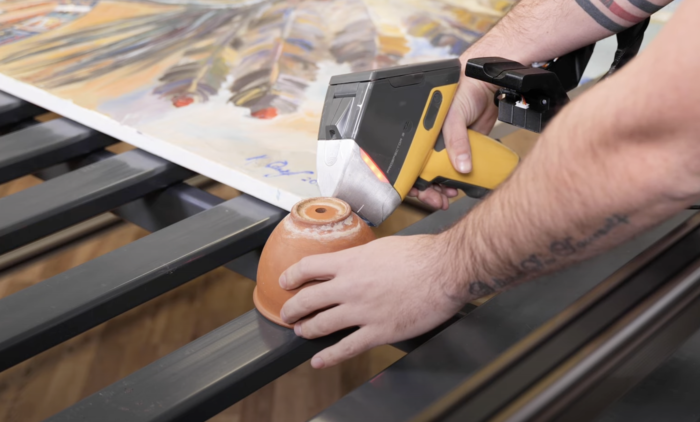
No time for complicated procedures? With the ProSpector 3, everything is intuitive: select the "Ceramic" mode, and the device does the rest.
How Does the Analysis Work?
- Prepare the Sample
Minimal preparation is required—just position the sample under the analyzer. - Start the Analysis
Select the appropriate mode, and the analyzer gets to work, “reading” the material and gathering detailed data about its composition. - View the Results
Within seconds, you’ll have a comprehensive report. No long wait times or guesswork—just fast, precise insights.
Real-World Applications: From History to Industry
The ProSpector 3 has proven itself invaluable across a range of fields:
- Archaeology
Analyze ancient ceramics to determine their age, origin, and manufacturing techniques. - Art and Antiques
Confirm the authenticity of an 18th-century vase or assess the materials used in delicate porcelain. - Industrial Quality Control
Test ceramic tiles for durability or evaluate heat-resistant materials right on the production floor.
Conclusion
The ProSpector 3 is more than just a device—it’s a gateway to understanding ceramics, from modern construction materials to ancient artifacts. Combining portability, precision, and ease of use, it’s an indispensable tool for researchers, manufacturers, and restorers alike.
Ready to unlock the secrets of ceramics with us? Contact Elvatech to learn more about the ProSpector 3. Subscribe to our blog for updates on XRF technology and innovations. Together, let’s make the complex world of materials more accessible and exciting!


