
 Mon-Fri 9:00 - 18:00 (GMT+3)


Coating analysis can tell you a lot about the contents of material, item, etc. The simplest example: one can measure the content of a detail made from a certain alloy without its damage. Another way to apply the analysis is by measuring the jewelry to identify harmful or excessive impurities and gilding. Coating thickness analysis finds its way to be applied in almost every sphere of heavy and light industry, building, utility, etc.
In What Industry Coating Thickness Measurement is a Must?

As coating thickness measurement with XRF allows getting an exact elemental composition of a cover, its fields of the appliance are numerous:
As for thickness testing, the XRF analysis is widely used in utility services and industry. In most cases, it helps to guess if the detail meets the desired characteristics, which is vital in some areas (aerospace construction, for instance).
Typical types of coatings are:
· Zinc over iron/steel;
· Chrome over iron/steel;
· Nickel over iron/steel;
· Copper over iron/steel;
· Gold over copper;
· Copper over aluminum;
· Molybdenum over titanium;
· Nickel over copper;
· Any other metal over any base;
Related products

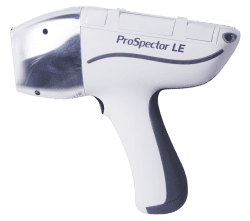
ProSpector 2

ProSpector 3
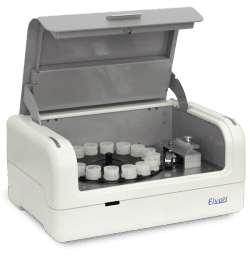
How Does XRF Analyzer Measures Coatings?
An XRF coating thickness tester, as it follows from its name, emits X-rays. These rays make the inner layers shoot the atom with an electron. The process is called ionization. While the electron from the inner layer of the atom coating is ejected and the electron is absent, the atom substitutes it with the outer electron spinning around the nucleus. This substitution emits so-called fluorescent radiation. Coating thickness measurement equipment perceives this radiation and builds a spectrum with it. This spectrum is shown on the screen, and a user can identify the thickness of the coating when they set the main element of this coating. X-ray thickness tester successfully measures the single-component coatings independently from the form and condition of a tested object.
Benefits of Using X-Ray Fluorescent for Coating Measurement
Since 1928 (the year of XRF analysis discovery), the XRF metal coating thickness tester equipment has been improved. Now, it is a very useful and comfortable way to analyze thickness with peculiar benefits for a user: The coatings analysis does not damage the material:
Handheld XRF Analyzers for Coatings Thickness Measurement
Today, different variations of XRF analyzers can be found on the market: from stable industrial items to small handheld versions.
Elvatech spectrometers provide fast, cheap, accurate, both in-filed and lab analysis of clays, slags, sand, limestone, cement, ceramics and various oxide materials and minerals.
Download the Application Note (.pdf)